

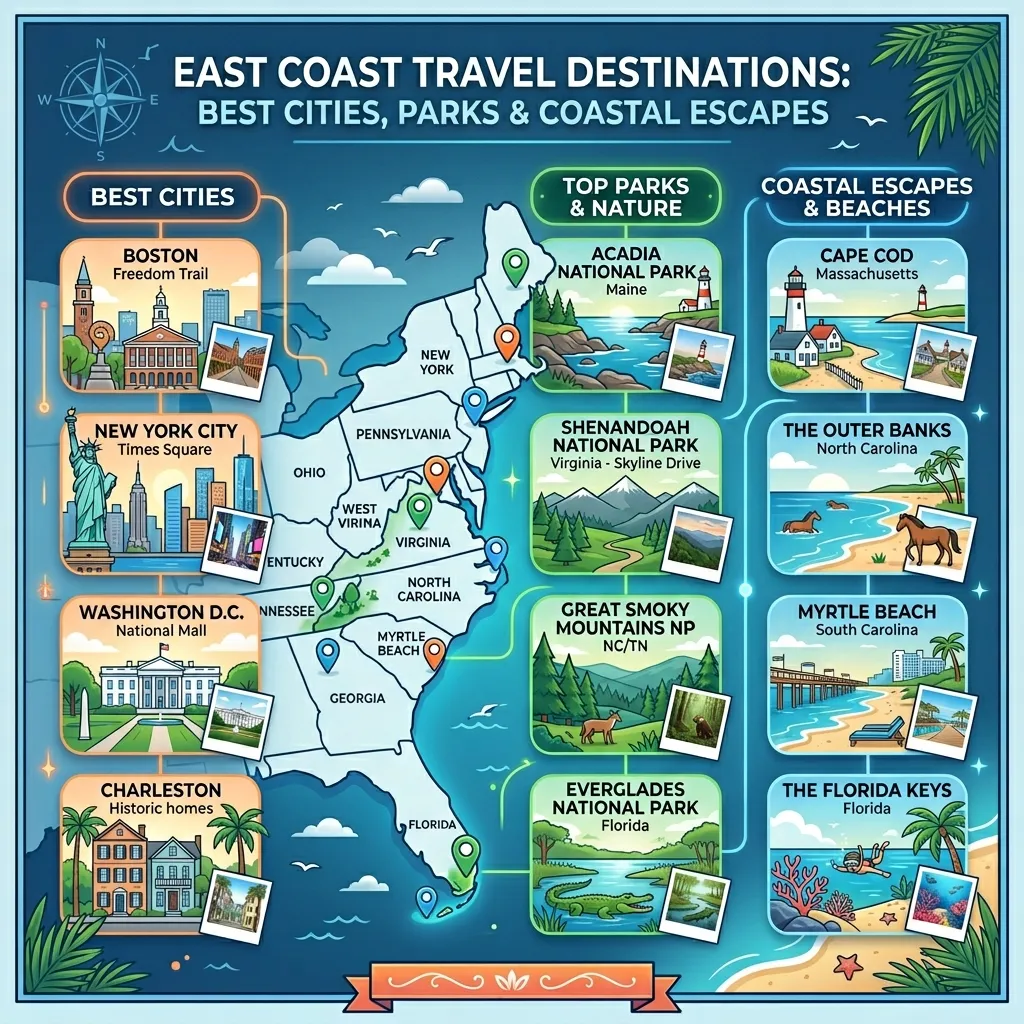
East coast travel destinations offer a flexible mix of city energy, coastal calm, and historic depth for travelers who want variety, convenience, and memorable experiences in one region.
Why east coast travel destinations stay appealing
East coast travel destinations keep winning attention because they solve a common travel problem: people want a trip that feels full without becoming exhausting. On the East Coast, that often means a skyline one day, a waterfront the next, and a historic district or national park when you need a slower pace. NYC Tourism, Meet Boston, Washington.org, Visit Philadelphia, Visit Savannah, and the National Park Service all show how much range this region gives to visitors.
People also love east coast travel destinations because the region is easy to shape around different traveler moods. Some visitors want iconic landmarks and nightlife. Others want walkable neighborhoods, food halls, harbor views, or quiet green space. The East Coast makes that easy because each city or stop has a strong identity, yet the trip still feels connected.
The smartest way to choose east coast travel destinations is to match the destination to your travel purpose first. If you want scale and movement, choose a major city. If you want atmosphere and charm, choose a historic district. If you want recovery time between busy days, add a park or a coastal town.
This is also why east coast travel destinations are useful for travelers who like balance. You do not have to choose between culture and nature, or between a productive trip and a relaxing one. The region supports both, and that flexibility is a big reason it keeps showing up on shortlists.
At the planning stage, east coast travel destinations work best when you think in themes rather than in random stop names. One day can be built around art, another around food, another around neighborhoods, and another around shoreline walks. That kind of structure lowers decision fatigue and makes the trip feel intentional.
What makes east coast travel destinations work so well
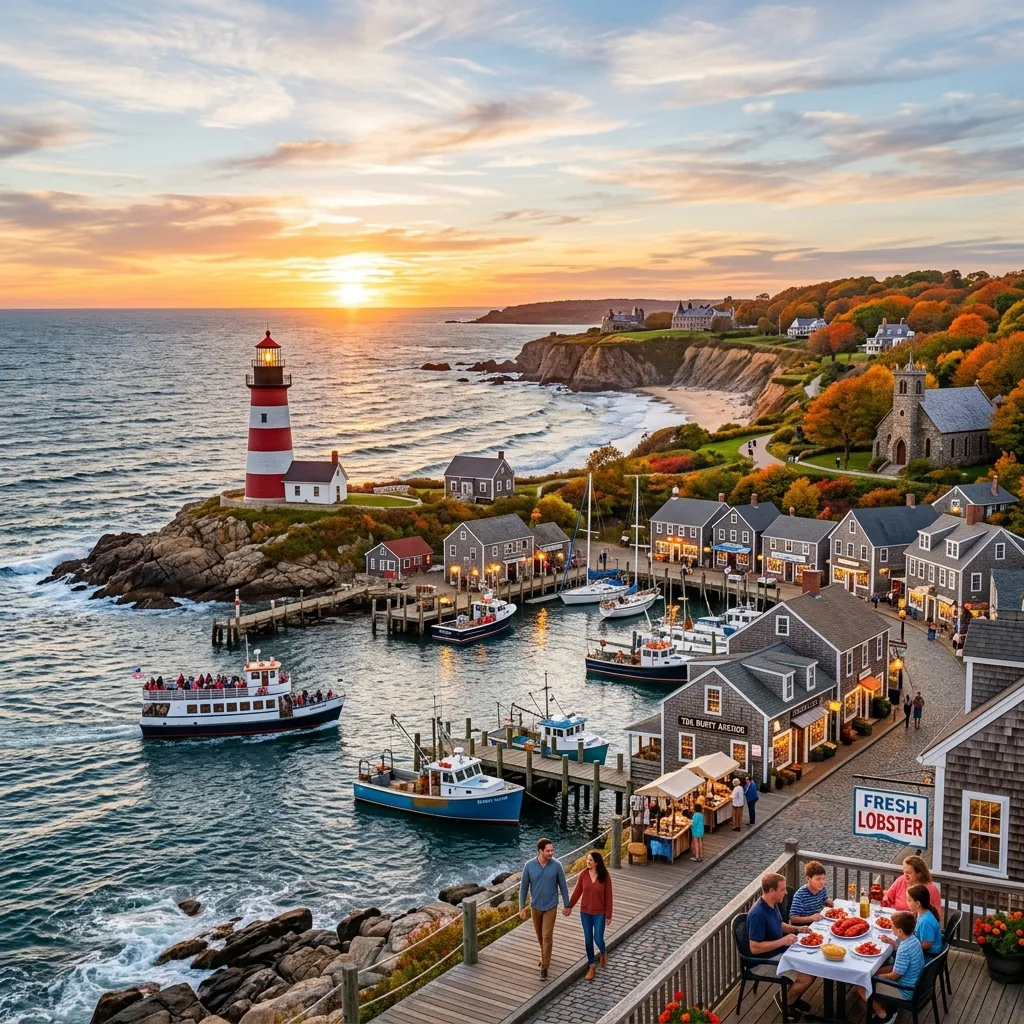
east coast travel destinations stand out because the region is dense with experiences that feel different from one another. A morning in a museum district can turn into an evening on a riverfront, and the next day can shift into a quieter harbor walk or a park visit. That variety keeps the itinerary fresh without forcing you to travel far.
Another reason east coast travel destinations are so practical is that many of them are built around visitor-friendly planning. Official tourism sites for New York City, Boston, Washington, DC, Philadelphia, Savannah, and Acadia all point visitors toward attractions, neighborhoods, itineraries, and transportation basics, which means the trip can be planned with more confidence.
For people who like a little structure, east coast travel destinations also work because the choices are clear. You can make a city trip about architecture, a coastal trip about walking and views, or a park trip about nature and quiet. That clarity makes the region easier to book, easier to pace, and easier to enjoy.
These east coast travel destinations also suit travelers who want a trip that feels familiar enough to plan quickly but rich enough to feel rewarding. That combination is powerful because it removes the fear of wasting time while still leaving room for discovery.
The region is especially good for first-timers because the big names are genuinely easy to understand. New York City, Boston, Washington, DC, Philadelphia, Savannah, and Acadia each have distinct personalities, and that makes it simple to pick one based on the kind of trip you want.
New York City: energy, variety, and constant movement
east coast travel destinations like New York City are ideal for travelers who want scale. NYC Tourism highlights the five boroughs, broad transportation access, neighborhood variety, and a mix of iconic and local experiences. That means the city can be as classic or as offbeat as you want it to be.
What makes east coast travel destinations in New York City especially compelling is the sense of momentum. You can move from a major attraction to a small neighborhood street, then end the day with food, shopping, or a skyline view. That range gives the city a built-in rhythm that many other places cannot match.
New York also works for travelers who like fast immersion. east coast travel destinations are often easiest when you have a strong anchor, and NYC gives you that instantly. Because the city is so layered, one visit can focus on one borough or one theme and still feel complete.
Boston: history, walkability, and a steady pace
east coast travel destinations in Boston are especially strong for travelers who want history without losing comfort. Meet Boston describes the city as a four-season, highly walkable destination with history, food, sports, and waterfront moments within reach, which makes the city feel compact and manageable.
That is why east coast travel destinations in Boston often work well for people who prefer a steady pace. You can build the day around a trail, a historic sight, a meal, and a harbor view without feeling like you are constantly rushing between far-apart neighborhoods.
Boston also fits travelers who like the city to feel layered but not overwhelming. east coast travel destinations in this category are valuable because they let you experience culture and calm in the same day, which is one of the reasons Boston is so easy to recommend.
Washington, DC: monuments, museums, and flexible sightseeing
east coast travel destinations in Washington, DC are a great fit for travelers who like structure. Destination DC presents the city through attractions, neighborhoods, restaurant ideas, and itinerary inspiration, which makes it easier to plan a meaningful visit whether you are there for a weekend or longer.
What makes east coast travel destinations in DC stand out is the mix of famous sites and local neighborhood energy. You can spend time near the National Mall, then switch to dining or exploring a different district without the city feeling repetitive.
Washington, DC is also a smart pick for travelers who want memorable sightseeing without too much friction. east coast travel destinations become more enjoyable when the logistics are manageable, and DC’s official visitor resources help make that happen.
Philadelphia: history, museums, neighborhoods, and contrast

east coast travel destinations in Philadelphia offer a strong blend of depth and ease. Visit Philadelphia presents the city as a place with museums, tours, attractions, events, and a wide mix of neighborhoods, which gives travelers plenty of ways to shape the visit.
That mix matters because east coast travel destinations do not have to feel polished in the same way to be valuable. Philadelphia is compelling exactly because it has contrast: historic energy, modern skyline views, cultural institutions, and day-to-day city life all close together.
east coast travel destinations like Philadelphia are useful for travelers who want a city that feels active but still walkable in spirit. The official tourism material makes it clear that the city rewards exploration across neighborhoods, events, and museums, which keeps a short stay from feeling shallow.
Savannah: charm, squares, and slower travel
east coast travel destinations in Savannah are perfect for travelers who want atmosphere more than speed. Visit Savannah highlights the Historic Landmark District, walkable streets, squares, tours, and outdoor options nearby, which gives the city a strong sense of place.
This is one of the east coast travel destinations where pacing really matters. Savannah works best when you let the city unfold slowly, because its appeal is tied to streets, shade, architecture, and a feeling of calm that grows as you walk.
east coast travel destinations can sometimes feel hectic, but Savannah gives the itinerary a softer edge. That makes it a strong choice for couples, solo travelers, and anyone who wants the trip to feel scenic and unhurried.
Acadia National Park: nature, movement, and a reset
east coast travel destinations in Acadia add a completely different energy to the region. The National Park Service points visitors toward places to go, hiking, biking, water activities, and practical planning details like directions and hours, which makes the park both inspiring and manageable.
What makes east coast travel destinations in Acadia so powerful is the reset they give after urban days. If your trip includes busy cities, the park can slow everything down and restore the sense of space that big destinations sometimes take away.
east coast travel destinations do not need to stay urban to feel complete. Acadia proves that the East Coast can also deliver hiking, coastal beauty, and enough quiet to make the whole route feel balanced.
How to build a smart route
east coast travel destinations are easiest to enjoy when you give each stop a role. One place can be your big-city day, another your historic day, another your food day, and another your nature day. That is much better than trying to force every destination to do the same job.
A useful route usually starts with one anchor city and one recovery stop. After that, you can layer in another city or a scenic break depending on your energy. east coast travel destinations work especially well in that model because the region has enough depth to support both high activity and slower pacing.
When travelers ask for east coast travel destinations, they are often really asking for a route that does not waste time. The best answer is usually a short list of places that fit together by mood, not just by map distance.
east coast travel destinations also benefit from a simple structure: arrive, explore, reset, repeat. That framework keeps each day clear and prevents the trip from becoming a blur of transportation and rushed decisions.
Planning for work and leisure

Business Travel Safety Tips matter on a trip like this because many visitors mix meetings with sightseeing. A practical routine, a charged phone, and a clear arrival plan can make a work-heavy itinerary feel much smoother.
A Smart Business Trip is not about packing the schedule; it is about protecting energy so the trip still feels productive at the end of the day. The same structure also helps leisure travelers who do not want to feel rushed.
Best Flight Tracking Apps can reduce stress before departure, especially when weather, connection times, or gate changes might affect a compact schedule. That small layer of awareness gives travelers more control over the day.
When you compare east coast travel destinations with Travel Destinations in Europe, the biggest difference is often logistics. The East Coast can be easier for short domestic breaks, but it still rewards thoughtful pacing and a realistic daily route.
Season matters more than many travelers expect. Spring and fall usually feel easiest for city walking, while summer can be better for beach time and longer evenings. Winter often rewards visitors who like museums, indoor dining, and lower crowd pressure.
A simple table can make planning easier by matching each stop to a clear purpose. For example, one city may be your food stop, another your history stop, and a park or coastal day may be your reset stop.
If the trip includes work, keep your arrival day light. Business travelers usually do better when the first evening is reserved for check-in, a short walk, dinner, and a backup plan in case a flight or ride runs late.
Technology helps when used as a support tool rather than a crutch. A good flight tracker, a transit app, and a notes app for confirmations can make the trip easier to manage.
Compared with a long-haul vacation, a regional trip like this often feels easier to customize because the distances are shorter and the choices are clearer. You can keep it luxurious, keep it lean, or blend both approaches.
One helpful way to think about the region is that every stop should answer a different question. Where is the best skyline? Where is the strongest sense of history? Where can you slow down and actually rest?
Travelers also get better results when they leave one open slot each day. A flexible hour can absorb delays, invite a spontaneous meal, or give you room to revisit a place that felt too rushed the first time.
If your audience includes families, couples, or colleagues, the itinerary should include one shared highlight and one personal choice every day. That keeps the group connected while still allowing different people to enjoy the trip in their own way.
A simple route framework
| Stop type | Best role in the trip | Why it works |
|---|---|---|
| Big city | First anchor | Fast energy, iconic sights |
| Historic city | Culture day | Strong story and walking appeal |
| Coastal town | Slow pace | Scenic break and calm mood |
| National park | Reset day | Nature, movement, and breathing room |
Conclusion
east coast travel destinations are so compelling because they match different travel moods without forcing you to compromise. You can chase skyline views, quiet parks, museum days, or ocean air and still keep the trip manageable. That balance makes the East Coast a strong choice for first-time visitors, repeat travelers, and anyone combining leisure with a work schedule. It also means every trip can feel different, even when the cities are familiar, because the pacing, theme, and mix of stops can change completely from one visit to the next. With the right plan, the region feels organized, rewarding, and easy to return to again.
FAQ
1. What makes east coast travel destinations so popular for short trips?
They combine strong transportation, recognizable landmarks, and enough variety to keep a weekend interesting without making the itinerary too hard to manage.
2. Which cities are best for first-time visitors?
New York City, Boston, Washington, DC, Philadelphia, Savannah, and Acadia each offer a different style of east coast travel destinations depending on whether you want history, culture, scenery, or a slower pace.
3. Are east coast travel destinations good for business travelers?
Yes. They work well for meetings and conferences because the region offers major airports, central neighborhoods, and easy ways to add a personal day afterward.
4. Can one trip include multiple cities?
Absolutely. east coast travel destinations are often best when paired by geography and pace, so you can build a route that stays realistic and still feels full.
5. What kind of traveler enjoys these destinations most?
People who like flexibility usually love east coast travel destinations because the region supports both energetic sightseeing and slower, more reflective travel.
6. Are there outdoor options too?
Yes. east coast travel destinations can include waterfronts, parks, beaches, walking trails, and national park scenery, so the trip does not have to be city-only.
7. How should I plan the pace?
The best approach is to anchor each day around one primary area, then leave room for meals, transit, and one extra stop that fits your energy level.
8. Is the East Coast expensive?
Costs vary by city, season, and location, but east coast travel destinations can still be planned well by mixing splurges with smarter lodging and transit choices.
9. What should I prioritize first?
Decide whether your trip is about culture, history, food, or views, then build the route so the rest of the details support that goal.
10. Why do travelers return to these places?
Because east coast travel destinations offer enough depth that one visit rarely covers everything, and the region keeps feeling fresh when you explore a different angle.



Leave a Reply