

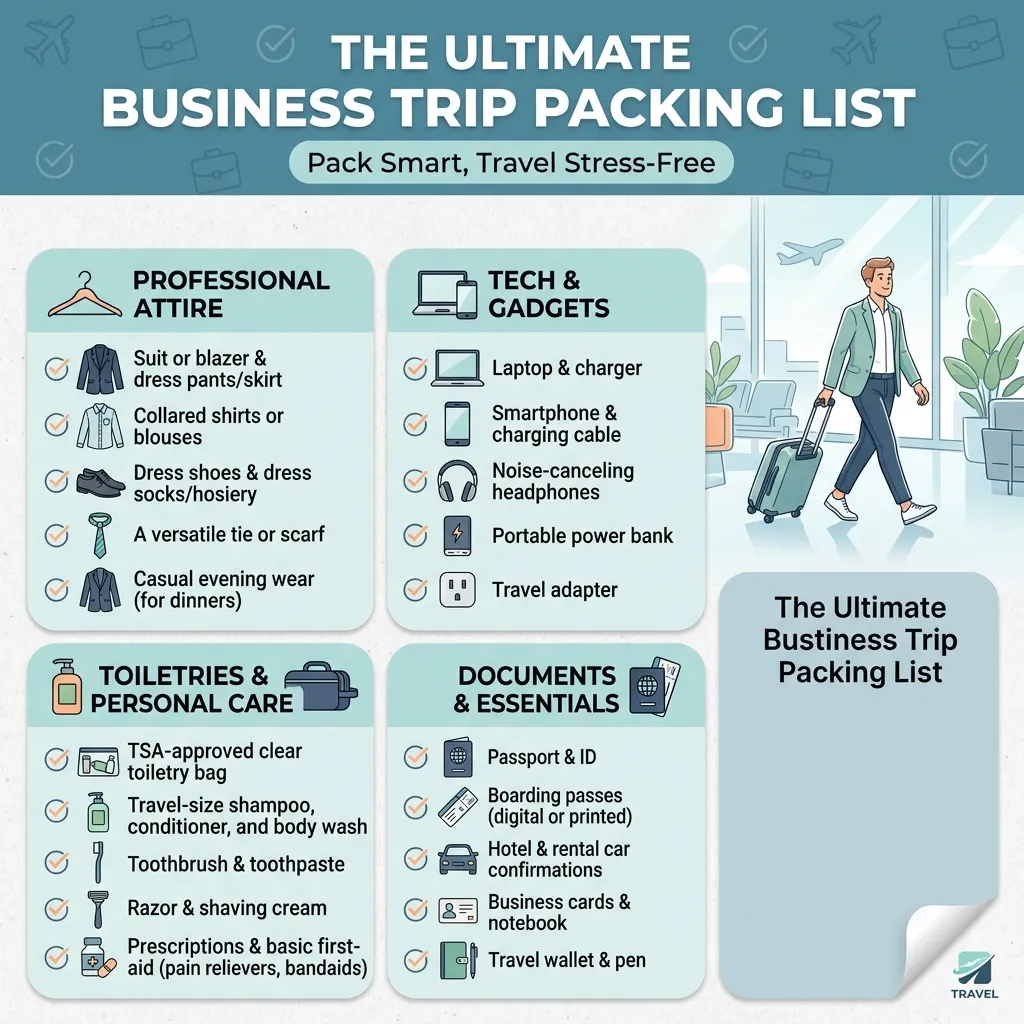
Planning a corporate trip? This complete business trip packing list walks you through every essential — from documents and tech to clothing and toiletries — so you never forget a critical item again. Whether you’re heading out for a one-day meeting or a week-long conference, this guide gives you a practical, category-by-category checklist plus expert packing tips to keep you organized, professional, and ready for anything.
Nothing derails a work trip faster than realizing you left your charger at home or forgot your ID at security. A well-thought-out business trip packing list isn’t just a nice-to-have — it’s the difference between arriving calm and prepared versus arriving frazzled and scrambling to buy replacements at the airport. Business travel comes with its own unique demands: you need to look sharp for meetings, stay connected for calls, and move quickly through airports, all while carrying as little as possible.
This guide breaks down a complete packing checklist into manageable categories, explains what to prioritize based on trip length, and shares practical tips that seasoned road warriors swear by. By the end, you’ll have a reusable list you can adapt for every future trip.
Why You Need a Business Trip Packing List
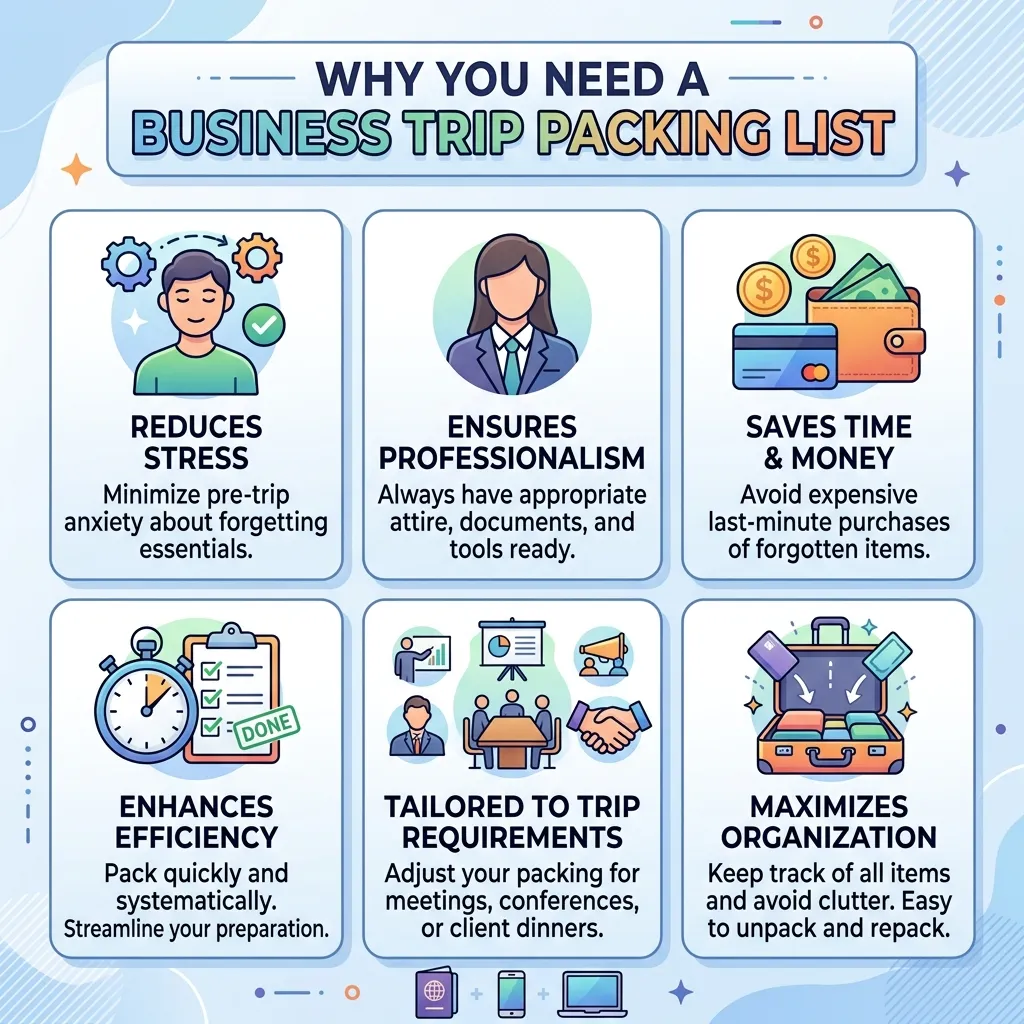
A packing list might sound like a small thing, but for frequent travelers it becomes a survival tool. Here’s why building a reliable checklist matters:
- Saves time: No more last-minute scrambling the night before a flight.
- Reduces stress: You know exactly what’s packed, so nothing feels left to chance.
- Prevents overpacking: A clear list keeps you focused on essentials only.
- Keeps you professional: Missing a blazer or the right shoes can undercut your presentation before you even walk into the room.
- Speeds up airport security: Knowing what’s in your bag means fewer surprises at the checkpoint.
If you’re new to frequent corporate travel, pairing this checklist with a broader business trip planning guide will help you build habits that make every future trip smoother.
The Essential Business Trip Packing List by Category
1. Travel Documents
These go at the top of every packing list because losing them can derail your entire itinerary.
- Passport or government-issued ID
- Boarding passes (digital and printed backup)
- Visa documents, if required
- Hotel confirmation and itinerary
- Company travel authorization letter (if applicable)
- Travel insurance documents
- Corporate credit card and personal cards
- A printed emergency contact sheet
Keep all documents in one dedicated folder or travel wallet so you’re not digging through your bag at check-in.
2. Technology and Work Essentials
Modern business travel runs on technology, so this section deserves special attention.
- Laptop and charger
- Phone and charger (plus a portable power bank)
- Universal travel adapter, especially for international trips
- Noise-cancelling headphones
- USB drive with important files
- Presentation materials, printed or backed up in the cloud
- Business cards
- A compact laptop lock, if working from shared spaces
Pro tip: always pack chargers and adapters in your carry-on, never in checked luggage. If your flight is delayed or your bag is lost, you’ll still be able to work.
3. Professional Clothing
Clothing is where many people overpack. A smart packing strategy focuses on versatility — pieces that mix and match so you look polished without hauling an oversized suitcase.
- 2–3 business outfits (suits, blazers, or business-casual sets depending on your company culture)
- 1 casual outfit for downtime or travel days
- Comfortable dress shoes plus a backup pair
- Undergarments and socks for each day, plus one extra set
- A light jacket or coat depending on climate
- Sleepwear
- A belt and any small accessories (tie, scarf, jewelry)
Stick to a neutral color palette so items can be reused across multiple outfits. This single trick can cut your packing volume in half.
4. Toiletries and Personal Care
Keep this section compact and TSA-compliant if you’re flying with a carry-on only.
- Travel-sized toothpaste, toothbrush, and mouthwash
- Deodorant
- Shampoo and conditioner (or check if your hotel provides these)
- Razor and shaving kit
- Skincare essentials
- Contact lenses or glasses, plus solution
- Any prescription medications in original packaging
- Hand sanitizer and a small first-aid kit
If you’re flying, check current liquid restrictions before you pack — rules can vary depending on the country and airline, so it’s worth a quick check of the TSA’s official guidance on what you can bring before you leave for the airport.
5. Health and Comfort Items
Long flights and packed schedules take a toll on your body. These often-forgotten items belong on every travel checklist:
- Refillable water bottle
- Snacks for flights or long meetings
- Travel pillow, especially for red-eye or long-haul flights
- Earplugs or a sleep mask
- Hand lotion
- Any vitamins or supplements you take regularly
- A compact umbrella
6. Extras Worth Considering
Depending on your itinerary, a few extra items can make a real difference:
- A reusable tote or foldable bag for extra items picked up during the trip
- A small notebook and pen for meetings when your laptop isn’t ideal
- Gifts or branded merchandise if you’re meeting clients
- Local currency, if traveling internationally
- A portable luggage scale to avoid overweight baggage fees
Packing by Trip Length
Not every trip calls for the same packing list. Here’s how to adjust based on duration.
Day trips (no overnight stay): Pack light — laptop bag, documents, phone charger, and a light layer. Skip toiletries and extra clothing entirely.
2–3 day trips: A carry-on suitcase is usually enough. Stick to 2 business outfits plus one backup, and travel-sized toiletries.
A week or longer: Consider checked luggage, but still aim to pack outfits that mix and match. Plan for laundry mid-trip rather than bringing a fresh outfit for every single day — most business hotels offer laundry service, or you can hand-wash essentials.
International trips: Add extra time for document checks, pack a universal adapter, and research any destination-specific requirements. Our business travel safety guide is a useful companion resource if you’re heading somewhere unfamiliar.
Carry-On vs. Checked Luggage
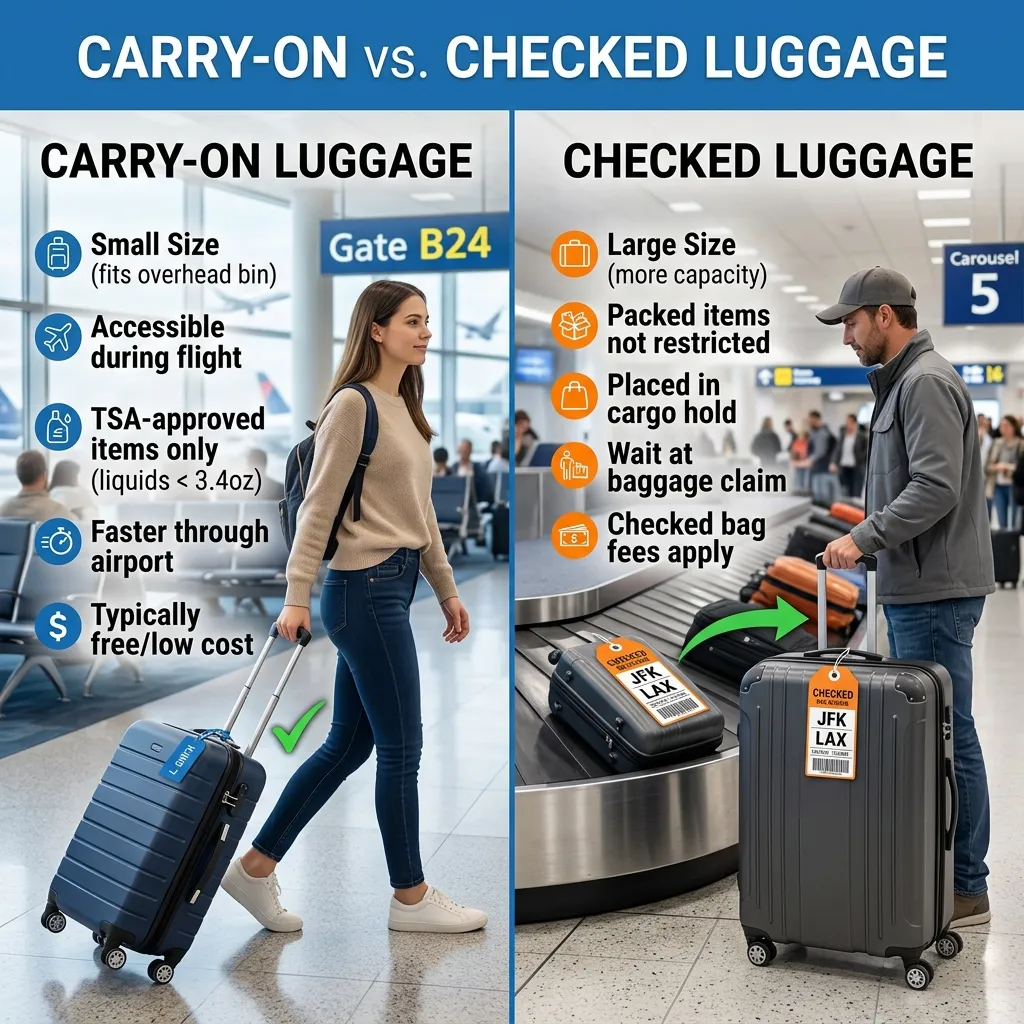
For most short business trips, sticking to a carry-on is the smarter move. It saves time at baggage claim, reduces the risk of lost luggage, and forces you to pack only what you truly need. A solid carry-on-only strategy should prioritize:
- Lightweight, wrinkle-resistant fabrics
- Multi-purpose shoes
- Compression packing cubes to maximize space
- Liquids under the allowed limit, packed in a clear quart-sized bag
If your trip requires equipment, samples, or multiple outfit changes for events, checked luggage may be unavoidable — just be sure to keep your documents, tech, and one change of clothes in your carry-on in case your checked bag is delayed.
Building a Packing Routine You Can Reuse
The real value of any business trip packing list comes from turning it into a repeatable routine rather than a one-time effort. Frequent travelers often keep a “travel kit” of duplicate toiletries, chargers, and adapters permanently packed and ready to grab, so they never have to raid their bathroom cabinet or desk drawer before every trip. Others keep a digital copy of their checklist on their phone, updating it after each trip with small lessons learned — an item they didn’t need, or one they wish they’d brought.
Consider laying out everything from your business trip packing list on your bed before packing it into your suitcase. This simple habit makes it easy to spot gaps and remove items you genuinely won’t use. It also helps you visualize how everything will fit, especially if you’re aiming to stay within a carry-on size limit.
Another habit worth building: pack the night before, not the morning of. Rushed packing is where most mistakes happen — forgotten chargers, mismatched shoes, or an outfit left on a hanger instead of in the suitcase. Giving yourself a calm hour the evening before departure makes the entire process smoother and far less stressful.
Common Packing Mistakes to Avoid
Even experienced travelers slip up. Watch out for these common mistakes when building your business trip packing list:
- Overpacking “just in case” items that never get used.
- Forgetting to check the weather at your destination.
- Packing chargers in checked luggage instead of carry-on.
- Ignoring wrinkle-prone fabrics that need extra care or steaming on arrival.
- Waiting until the last minute to pack, which leads to forgotten items.
- Not confirming dress code for specific meetings or events.
- Skipping a backup form of payment in case a card is declined abroad.
- Leaving important documents un-organized, leading to stress at check-in.
If you frequently book flights or hotels for work, reviewing a corporate travel booking guide can help you streamline logistics so packing is the only thing left to think about.
Quick-Reference Business Trip Packing List Checklist
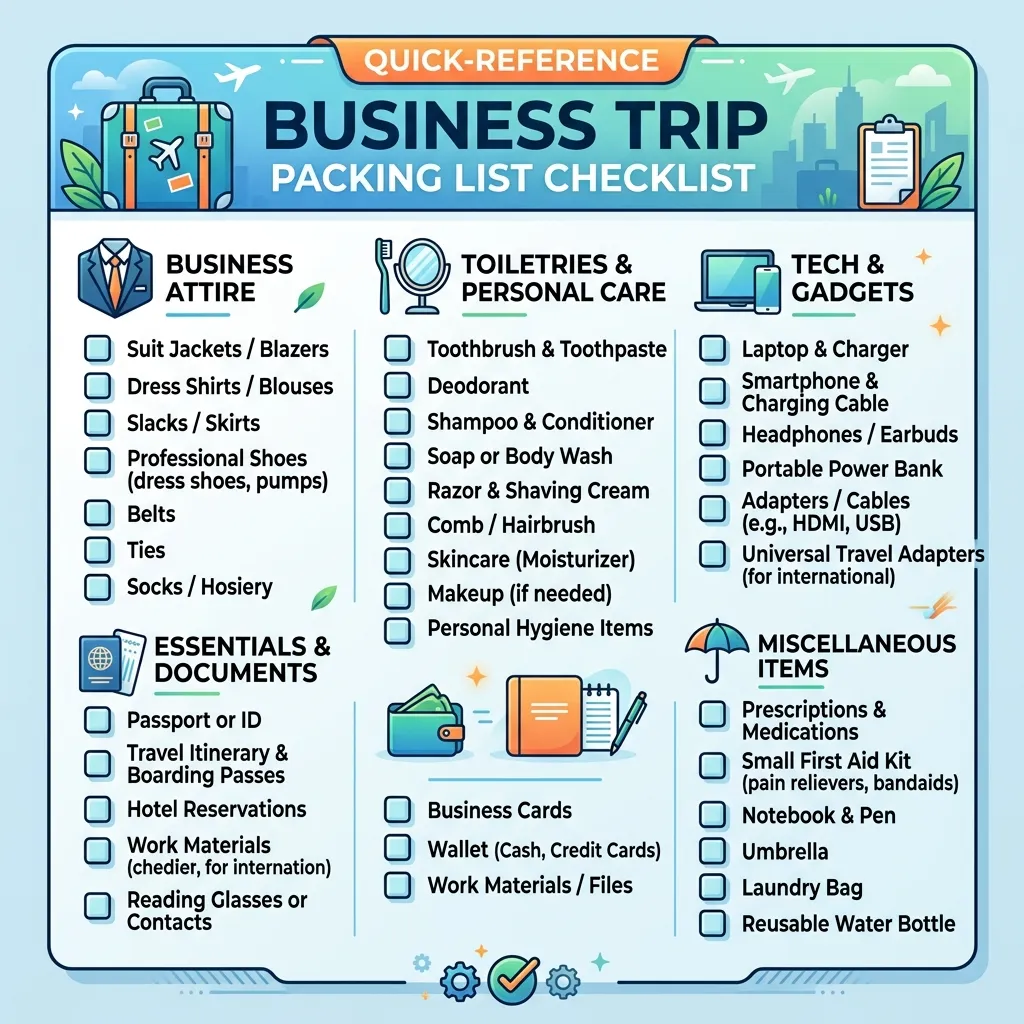
- Travel documents and ID
- Laptop, charger, and power bank
- Phone charger and adapter
- 2–3 business outfits
- Comfortable shoes
- Toiletries (travel-sized)
- Medications
- Snacks and water bottle
- Travel pillow and comfort items
- Notebook and pen
- Business cards
- Local currency or backup payment method
Print this section out or save it to your phone so you can check items off before every trip.
Conclusion
A reliable business trip packing list turns a potentially stressful process into a quick, repeatable routine. By organizing your essentials into clear categories — documents, tech, clothing, toiletries, and health items — you’ll spend less time worrying about what you forgot and more time focused on the meetings and opportunities that brought you on the road in the first place. Save this business trip packing list, adapt it to your own travel habits, and you’ll be ready to pack in minutes before every future trip.
Frequently Asked Questions
1. What should be at the top of every Business Trip Packing List?
The first items on every Business Trip Packing List should be your travel documents, including your ID, boarding pass, visa, and any required authorization paperwork. These essentials should always be checked before packing anything else.
2. How many outfits should I pack for a 3-day business trip?
A practical Business Trip Packing List for a 3-day trip usually includes 2–3 business outfits and one casual option. Choose neutral, versatile pieces that can be mixed and matched to keep your Business Trip Packing List compact.
3. Should I check a bag or use carry-on only for a short business trip?
For trips of three days or less, carry-on only is generally the most efficient option. A well-planned Business Trip Packing List can help you avoid checked luggage, save time at the airport, and reduce the risk of lost baggage.
4. What tech essentials should never be left at home?
Your laptop charger, phone charger, portable power bank, and universal adapter should be essential items on your Business Trip Packing List. For international trips, remember to check the destination’s electrical outlet requirements.
5. How do I keep my clothes wrinkle-free while traveling?
Include packing cubes and wrinkle-resistant clothing in your Business Trip Packing List. Rolling clothes instead of folding them can also save space and reduce wrinkles. A compact travel steamer can be useful for longer business trips.
6. What toiletries are allowed in carry-on luggage?
When preparing your Business Trip Packing List, remember that carry-on liquids are generally limited to containers of 3.4 oz (100 ml) or less and must fit within the required clear bag. Always check the current rules for your airline and destination.
7. Do I need to bring printed copies of documents if everything is digital?
Yes. A reliable Business Trip Packing List should include printed backups of important documents such as your boarding pass, hotel confirmation, itinerary, and critical travel paperwork. These backups can be useful if your phone or internet connection fails.
8. How can I avoid overpacking for a business trip?
The best way to avoid overpacking is to create your Business Trip Packing List before you start packing. Focus on versatile clothing, essential technology, toiletries, and documents, and avoid adding unnecessary “just in case” items.
9. What should I pack differently for international business trips?
An international Business Trip Packing List should include a universal adapter, local currency or a suitable payment method, passport, visa documents, and any required travel paperwork. You should also check destination-specific customs and entry requirements.
10. Is it okay to wear the same outfit twice on a business trip?
Absolutely. Reusing core clothing pieces is a smart strategy for a Business Trip Packing List. Choose neutral colors and versatile items that can create different combinations without requiring a large suitcase.
11. What items are commonly forgotten when packing for a business trip?
Chargers, medication, backup shoes, personal toiletries, and printed itineraries are commonly forgotten. Before leaving, review your Business Trip Packing List one final time to make sure these small but important items are included.
12. How far in advance should I start packing for a business trip?
Ideally, review your Business Trip Packing List 1–2 days before departure. This gives you enough time to do laundry, organize your documents, charge your devices, and purchase anything missing from your Business Trip Packing List.



Leave a Reply