

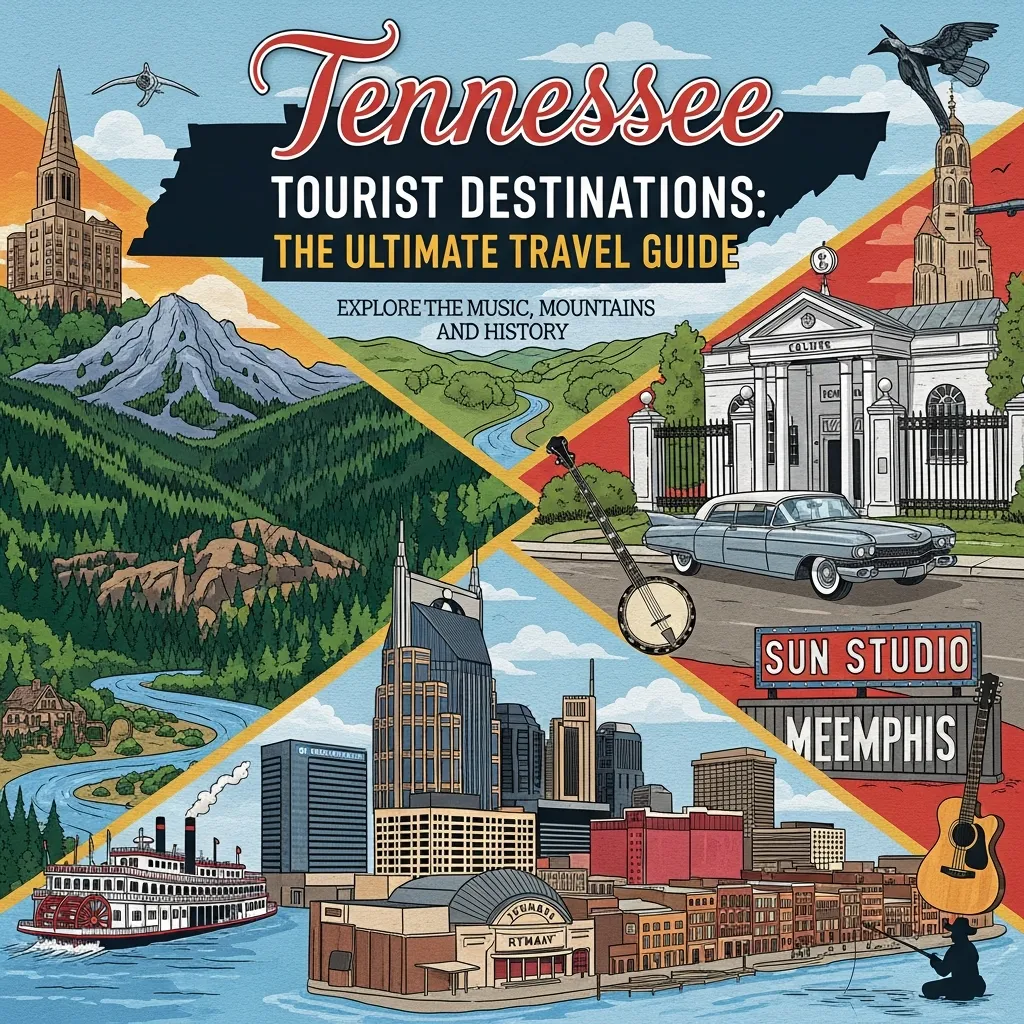
Tennessee tourist destinations span a remarkable range of experiences—from Nashville’s legendary live music scene and Memphis’s blues heritage to the breathtaking trails of Great Smoky Mountains National Park. This guide covers the state’s top cities, hidden gems, family activities, and essential planning tips to help you make the most of your visit to the Volunteer State.
Tennessee doesn’t ask you to pick a lane. One day you’re two-stepping on Broadway in Nashville, the next you’re watching black bears wander through a misty mountain valley. Few states pack this much variety into a single trip, which is exactly why Tennessee tourist destinations draw tens of millions of visitors every year.
The numbers back it up. Great Smoky Mountains National Park alone welcomes more than 12 million visitors annually, making it the most visited national park in the United States, according to the National Park Service. Meanwhile, Nashville has transformed into one of the fastest-growing tourism cities in the country, and Memphis continues to draw music lovers and history enthusiasts from across the globe.
This guide is built to help you plan smarter—whether you’re chasing live music in Music City, hiking above the clouds in the Smokies, or tracing American history along Beale Street. You’ll find a city-by-city breakdown, trip planning essentials, outdoor adventure ideas, and a full FAQ section at the end. Consider this your starting point for an unforgettable Tennessee adventure.
Nashville: Music City Unplugged
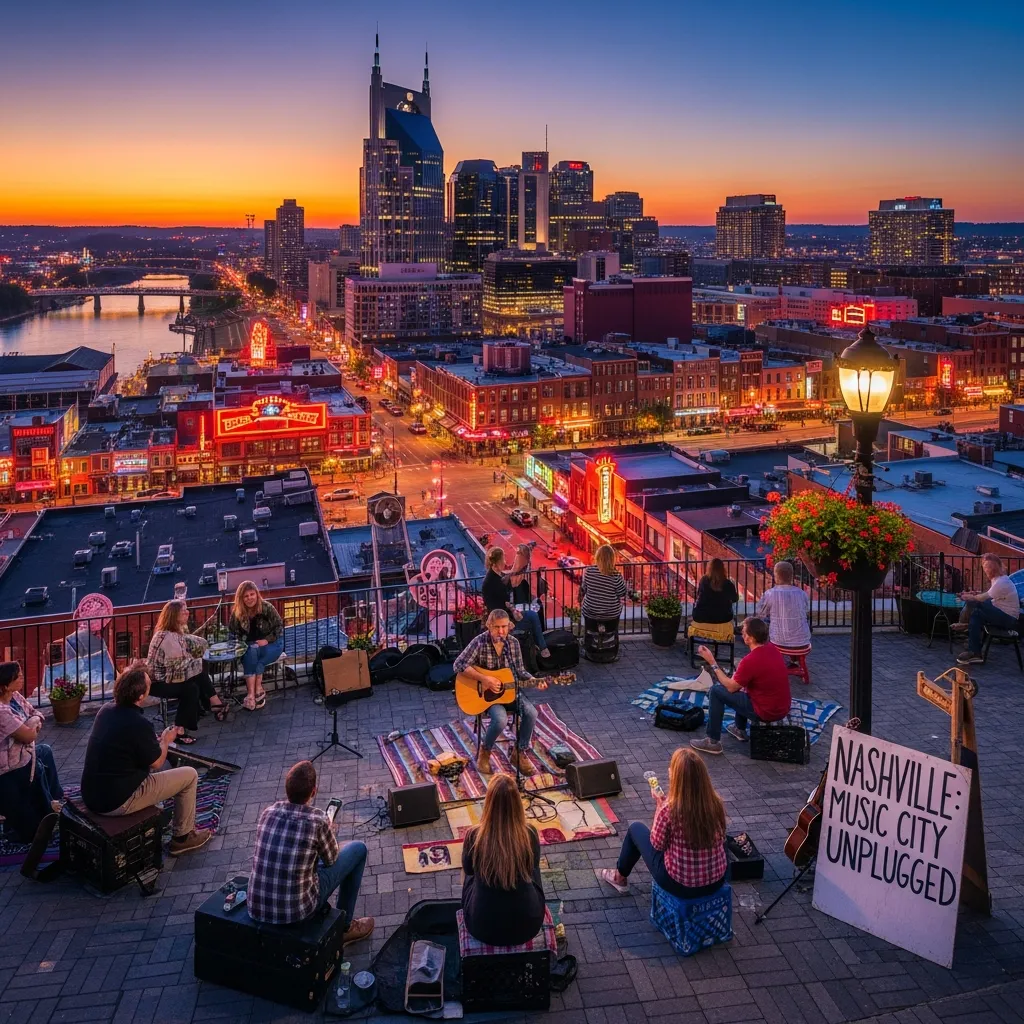
Broadway’s Honky Tonks and Live Music Venues
No list of Tennessee tourist destinations is complete without Nashville leading the way. Lower Broadway is the beating heart of Music City—a strip of neon-lit honky tonks where live music flows from noon until 3 a.m., seven days a week. Tootsie’s Orchid Lounge, Robert’s Western World, and Legends Corner are among the iconic spots where both locals and legends have taken the stage. Entry is typically free, so you can bar-hop your way through an afternoon without spending a dime on cover charges.
The Grand Ole Opry and Ryman Auditorium
The Grand Ole Opry is the longest-running live radio broadcast in American history, having aired continuously since 1925. A night at the Opry—whether at its modern home in the Opryland district or at the historic Ryman Auditorium downtown—is an experience that connects you directly to the roots of country music. The Ryman, often called the “Mother Church of Country Music,” offers both live performances and self-guided daytime tours.
Country Music Hall of Fame and Museum
For a deeper dive into Nashville’s musical heritage, the Country Music Hall of Fame and Museum is essential. The collection spans more than 2.5 million artifacts, including Elvis Presley’s “solid gold” Cadillac and handwritten lyrics from country legends. Plan for at least two to three hours here.
Culinary Scene and Southern Hospitality
Nashville’s food scene has evolved dramatically over the last decade. Hot chicken—a fiery Nashville invention—is available everywhere from Hattie B’s to Prince’s Hot Chicken Shack, which has been serving the original recipe since 1945. Beyond hot chicken, you’ll find a thriving restaurant culture with James Beard Award-nominated chefs and farm-to-table concepts that rival major culinary cities.
Great Smoky Mountains National Park: Nature’s Masterpiece
Scenic Drives and Hiking Trails for Every Level
Great Smoky Mountains National Park straddles the Tennessee-North Carolina border and offers more than 800 miles of hiking trails. Alum Cave Trail is one of the most popular routes, leading to dramatic rock formations and, for the determined, the summit of Mount LeConte at 6,593 feet. Clingmans Dome Road provides a scenic drive to the highest point in the park, where a spiral observation tower offers 360-degree views above the clouds—when the mist clears.
Smoky Mountains tourism peaks in October during fall foliage season, but spring wildflower blooms and summer trail accessibility make April through June equally rewarding.
Wildlife Viewing and Photography Opportunities
The park is home to approximately 1,500 black bears, making wildlife photography a major draw. Deer, elk (reintroduced in 2001), wild turkeys, and over 200 species of birds also inhabit the park. Dawn and dusk are the best times to spot wildlife along roadsides and open meadows.
Cades Cove and Historical Sites
Cades Cove is a wide, flat valley encircled by mountains and dotted with preserved 19th-century homesteads, barns, and churches. The 11-mile loop road is one of the most scenic drives in the eastern United States. On Wednesday and Saturday mornings until 10 a.m., the loop is open to cyclists and walkers only—no cars.
Gatlinburg and Pigeon Forge: The Gateway Towns
Gatlinburg serves as the quieter, more charming gateway to the park, with an arts-and-crafts community and mountain resort atmosphere. Pigeon Forge is the livelier alternative, home to Dollywood—Dolly Parton’s nationally acclaimed theme park—and a packed strip of attractions, mini-golf courses, and outlet shopping. Both towns offer a wide range of accommodation options and are excellent bases for exploring Tennessee tourist destinations in this region.
Memphis: Home of the Blues and Rock ‘n’ Roll
Graceland: Elvis Presley’s Iconic Estate
Graceland is one of the most visited private homes in America, drawing more than 600,000 visitors annually. The mansion tour takes you through Elvis Presley’s living quarters, trophy room, and the Meditation Garden where he is buried. The expanded Elvis Presley’s Memphis complex across the street houses his personal aircraft, a museum, and an entertainment venue. Memphis tourist spots don’t come much more iconic than this.
Beale Street: Live Music and Entertainment
Beale Street Music is where the blues was born, commercially at least. W.C. Handy, often credited as the “Father of the Blues,” made this street famous in the early 1900s. Today, Beale Street stretches several blocks of live music venues, restaurants, and bars. B.B. King’s Blues Club—founded by the late legend himself—remains one of the top spots for authentic live blues.
National Civil Rights Museum
Built on the site of the Lorraine Motel, where Dr. Martin Luther King Jr. was assassinated on April 4, 1968, the National Civil Rights Museum is one of the most important cultural institutions in the country. The museum chronicles the American civil rights movement with immersive exhibits and primary-source artifacts. This is a mandatory stop for any visitor to Memphis.
Memphis Barbecue and Culinary Delights
Memphis-style barbecue is dry-rubbed, slow-smoked, and deeply serious. The city hosts the World Championship Barbecue Cooking Contest every May, drawing over 100,000 attendees. For year-round barbecue, Charlie Vergos’ Rendezvous (in a downtown alleyway since 1948) and Central BBQ are the local benchmarks.
Chattanooga: The Scenic City
Ruby Falls and Lookout Mountain
Chattanooga attractions are anchored by Lookout Mountain, a ridge that offers staggering views across four states. Ruby Falls, located inside Lookout Mountain itself, is America’s deepest commercial cave and home to a 145-foot underground waterfall. Rock City, another Lookout Mountain attraction, features ancient rock formations and “Lover’s Leap,” a promontory with panoramic views reaching into Georgia, Alabama, North Carolina, and Tennessee simultaneously.
Tennessee Aquarium and Creative Discovery Museum
The Tennessee Aquarium, situated on the riverfront, is one of the largest freshwater aquariums in the world. Its River Journey and Ocean Journey galleries house everything from river otters to sharks. For families with younger children, the Creative Discovery Museum nearby provides hands-on science and arts exhibits that keep kids engaged for hours. Tennessee family travel in Chattanooga is genuinely well-catered.
Walnut Street Bridge and Riverfront Activities
The Walnut Street Bridge, built in 1890, is one of the longest pedestrian bridges in the world at 2,376 feet. The riverfront district it connects is packed with restaurants, boutiques, and rental bikes. In summer, the riverfront hosts free outdoor concerts as part of the city’s Nightfall series.
Chattanooga Choo Choo
The historic Chattanooga Choo Choo terminal, made famous by Glenn Miller’s 1941 song, has been transformed into a hotel and entertainment complex. Vintage rail cars serve as unique hotel accommodations, and the complex includes restaurants and a model railroad museum—one of the more distinctive overnight stays among Tennessee tourist destinations.
Other Notable Tennessee Tourist Destinations
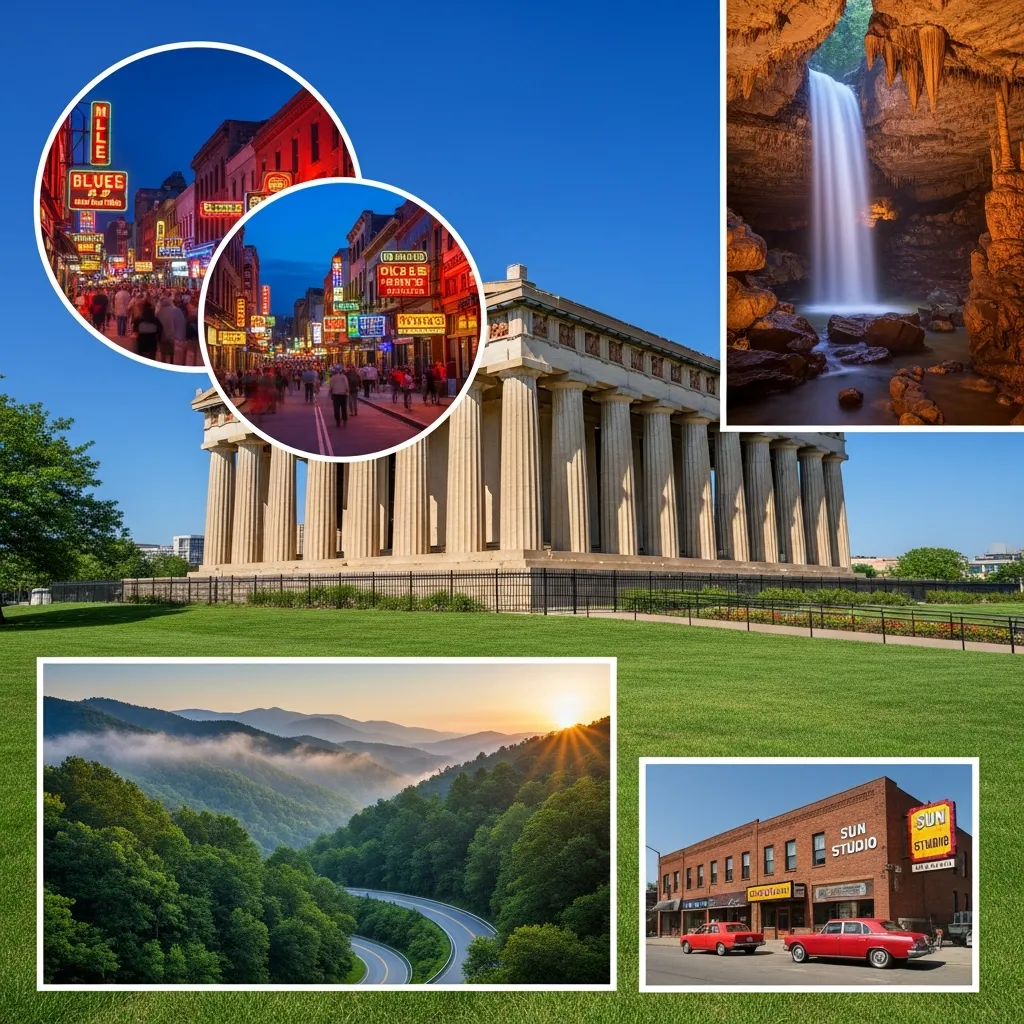
Knoxville: Urban Charm and Outdoor Adventures
Knoxville is Tennessee’s third-largest city and a gateway to both the Smoky Mountains and the University of Tennessee’s vibrant campus culture. Market Square hosts year-round festivals, and the Old City neighborhood has a growing restaurant and nightlife scene. Outdoor enthusiasts will appreciate the Urban Wilderness—a network of over 50 miles of trails just minutes from downtown.
Franklin: Historic Downtown and Civil War Sites
Just 20 miles south of Nashville, Franklin is one of Tennessee’s most charming small towns. The 2023 American Battlefield Trust survey ranked the Battle of Franklin as one of the most significant and undervisited Civil War sites in the country. Carter House and Carnton Plantation offer guided tours that bring this history vividly to life. Downtown Franklin’s Main Street is lined with boutiques, antique shops, and farm-to-table restaurants worth the short drive from Nashville.
Jack Daniel’s Distillery in Lynchburg
Jack Daniel’s has been distilling whiskey in Lynchburg since 1866, making it the oldest registered distillery in the United States. The tours are free and surprisingly in-depth, walking visitors through the charcoal mellowing process that distinguishes Tennessee whiskey from bourbon. The town of Lynchburg itself is worth a wander—population just under 6,000, with a classic small-town square surrounding the Moore County courthouse.
Shiloh National Military Park
Located in southwestern Tennessee, Shiloh National Military Park preserves the site of the April 1862 Battle of Shiloh, one of the bloodiest engagements of the Civil War. More than 23,000 soldiers were killed, wounded, or captured over two days. The park’s 13-mile auto tour and extensive trail system make it accessible for both casual visitors and history enthusiasts.
Planning Your Trip to Tennessee
What Is the Best Time to Visit Tennessee?
Spring (April–May) and fall (September–October) are the sweet spots for most Tennessee tourist destinations. Temperatures are mild, crowds are manageable (outside peak fall foliage weekends), and outdoor activities are at their best. Summer brings heat and humidity but also peak festival season. Winter is the least crowded period, with cheaper accommodation and a quieter Great Smoky Mountains experience—though some higher-elevation roads may close.
Accommodation Options From Luxury to Budget
Tennessee’s accommodation range is genuinely wide. Nashville offers luxury options like The Joseph and 1 Hotel Nashville alongside well-located budget chains near the airport. In Gatlinburg and Pigeon Forge, cabin rentals are enormously popular and often more economical for families than standard hotels. Chattanooga’s downtown boutique hotels and historic properties like the Read House offer strong mid-range value.
Transportation Tips for Getting Around Tennessee
Tennessee is best explored by car. Distances between major cities are significant—Nashville to Memphis is about three hours; Nashville to Chattanooga is roughly two hours. Interstate highways are well-maintained and clearly signed. Within Nashville, the WeGo Public Transit system and rideshare options cover most tourist areas. Gatlinburg offers a free trolley service linking major attractions along the main strip.
Travel Safety Accessories for Your Journey
Packing the right travel safety accessories makes a meaningful difference, especially for road trips and outdoor adventures. A quality first-aid kit, portable phone charger, reflective emergency triangle, and car jump starter are smart additions to any vehicle. For hiking in the Smokies, carry a trail map (cell service is unreliable in the park), bear-resistant food canister if camping, and weather-appropriate layers. Sun protection and insect repellent are essential between May and September.
Maximizing Your Tennessee Experience
Family-Friendly Activities Across the State
Tennessee excels at Tennessee family travel. Dollywood in Pigeon Forge consistently ranks among the top theme parks in the Southeast. The Children’s Museum of Memphis and Nashville’s Adventure Science Center are standout indoor options. For outdoor family adventures, the calm waters of Dale Hollow Lake and Center Hill Lake are ideal for beginner kayaking and paddleboarding.
Outdoor Adventures: Kayaking, Fishing, Ziplining
Beyond the Smokies, Tennessee’s outdoor adventure scene is extensive. The Ocoee River in southeastern Tennessee hosted whitewater kayaking events during the 1996 Atlanta Olympics. Fly fishing is exceptional in the Clinch and South Holston Rivers, both managed as delayed-harvest trout fisheries. Ziplining operations are concentrated around Gatlinburg and Pigeon Forge, with canopy tours offering views of the mountain ridgeline.
Cultural Experiences and Local Festivals
Tennessee’s festival calendar is packed. The CMA Fest in Nashville draws over 80,000 attendees each June, offering outdoor concerts featuring dozens of country artists. Memphis in May hosts both the Beale Street Music Festival and the World Championship Barbecue Cooking Contest in back-to-back weekends. Knoxville’s Big Ears Festival has gained national recognition as one of America’s most adventurous music festivals, featuring experimental, classical, and jazz programming.
How Tennessee Compares to Other U.S. Travel Destinations
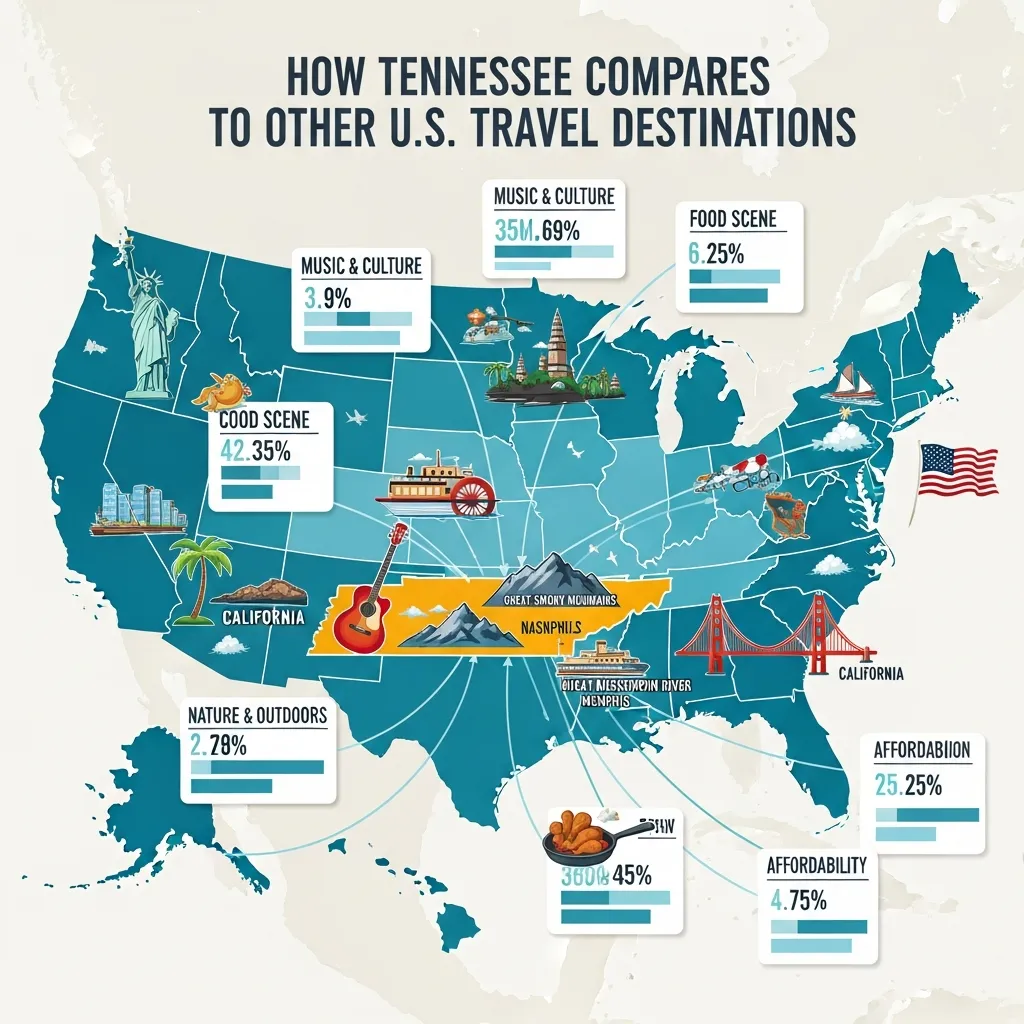
Travelers often weigh Tennessee against destinations like Washington State tourist destinations, New Orleans tourist destinations, San Antonio tourist destinations, and Midwest travel destinations. Washington State offers dramatic Pacific coastline and iconic national parks like Olympic and Rainier, but lacks Tennessee’s concentrated urban music culture. New Orleans tourist destinations share Tennessee’s deep musical heritage and culinary ambition, though New Orleans skews more toward nightlife and festival culture than outdoor adventure. San Antonio tourist destinations center heavily on the Alamo, River Walk, and Tex-Mex cuisine—strong picks for history lovers, though less varied in landscape. Midwest travel destinations offer authentic small-town Americana and Great Lakes access but generally don’t match Tennessee’s depth of live music heritage. Tennessee’s genuine advantage is range—urban entertainment, natural beauty, culinary depth, and historic significance all in a single state.
Conclusion
Tennessee’s appeal as a travel destination is difficult to summarize in a single sentence, and that’s precisely the point. From the neon glow of Nashville’s honky tonks to the fog-draped ridgelines of the Smokies, from Graceland’s velvet-rope nostalgia to the solemn corridors of the National Civil Rights Museum, Tennessee tourist destinations reward curiosity at every turn.
The Volunteer State offers something most destinations can’t: a genuine intersection of music, history, nature, and food that doesn’t feel manufactured for tourists. It’s a place where a world-class national park sits an hour from a nationally ranked theme park, and where a five-star dining scene coexists with a 75-year-old barbecue institution down the block.
Start with the city that speaks to you most—Nashville for music and food, Memphis for history and blues, Chattanooga for outdoor adventure, or the Smokies for pure natural wonder. Then let Tennessee surprise you with everything else it has to offer.
Frequently Asked Questions About Tennessee Tourist Destinations
What are the must-see Tennessee tourist destinations?
Some of the top Tennessee tourist destinations include Nashville, Memphis, Great Smoky Mountains National Park, and Chattanooga. Travelers also love places like Franklin, Knoxville, Lynchburg, and Shiloh National Military Park for a mix of music, history, outdoor scenery, and Southern culture.
Is Tennessee a good family vacation spot?
Yes, Tennessee tourist destinations are great for families thanks to attractions like Dollywood, the Tennessee Aquarium, the Adventure Science Center, and family-friendly trails in the Smokies. The state offers a strong mix of nature, entertainment, and educational stops for all ages.
How many days do you need to visit the Great Smoky Mountains?
If the Great Smoky Mountains are one of your main Tennessee tourist destinations, plan for at least two to three days. A longer stay of four to five days gives you more time to explore scenic drives, hiking trails, and nearby towns like Gatlinburg and Pigeon Forge.
What is the best time of year to visit Tennessee?
The best time to explore Tennessee tourist destinations is usually spring or fall, when temperatures are pleasant and the scenery is especially beautiful. Fall is popular for Smoky Mountain foliage, while spring brings blooming landscapes and comfortable weather for city and outdoor travel.
What food should I try in Tennessee?
When visiting Tennessee tourist destinations, don’t miss local favorites like Nashville hot chicken, Memphis barbecue, Southern biscuits, catfish, and Tennessee whiskey. Food is a big part of the travel experience in cities like Nashville and Memphis.
Are there any hidden gems in Tennessee?
Yes, beyond the best-known Tennessee tourist destinations, the state has hidden gems like Fall Creek Falls State Park, Rugby, and Shiloh National Military Park. These spots offer beautiful scenery, local history, and fewer crowds than the state’s biggest attractions.
What is there to do in Nashville besides country music?
Nashville is one of the most popular Tennessee tourist destinations, but there’s more to do than music. You can visit the Frist Art Museum, explore the Parthenon in Centennial Park, enjoy great food in Germantown, or take a scenic drive along the Natchez Trace Parkway.
How far is Memphis from Nashville?
Memphis is about 212 miles from Nashville, and the drive usually takes around three hours. Since both are major Tennessee tourist destinations, many travelers include them in the same road trip itinerary.
Is it better to stay in Gatlinburg or Pigeon Forge?
If you’re exploring Smoky Mountain Tennessee tourist destinations, Gatlinburg is ideal for a more walkable mountain-town feel and easier park access, while Pigeon Forge is better for family attractions, entertainment, and a wider range of accommodations.
What are some free things to do in Tennessee?
There are plenty of free Tennessee tourist destinations and activities, including visiting Great Smoky Mountains National Park, walking Chattanooga’s Walnut Street Bridge, exploring Cades Cove, and enjoying public spaces, scenic drives, and local downtown areas.
What should I pack for a Tennessee trip?
For a trip focused on Tennessee tourist destinations, pack comfortable walking shoes, weather-appropriate layers, a portable charger, a reusable water bottle, and road-trip essentials if you plan to drive. If you’re visiting the Smokies, hiking gear and a trail map are also smart additions.
How does Tennessee compare to other U.S. travel destinations?
What makes Tennessee tourist destinations stand out is the combination of live music, scenic mountains, Southern food, and historic attractions. Few states offer the same balance of city culture, road-trip routes, and outdoor adventure in one destination.



Leave a Reply